Elige tu región

Selecciona la región que mejor se ajuste a tu ubicación o preferencias.

Elige el idioma del sitio

Esta configuración controla el idioma de la interfaz de usuario, incluidos los botones, los menús y todo el texto del sitio. Selecciona tu idioma preferido para la mejor experiencia de navegación.

Elige los idiomas para los anuncios de empleo

Selecciona los idiomas para los anuncios de empleo que deseas ver. Esta configuración determina qué anuncios de empleo se mostrarán.
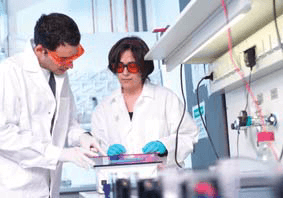
International Max Planck RS for Heart and Lung Research (IMPRS-HLR)

International Max Planck RS for Heart and Lung Research (IMPRS-HLR)

Visitar página Web

Sobre el empleador

Max Planck Societyimprs-hlr-img3

The Max Planck Society (MPG) is Germany's most successful research organization. No fewer than 17 Nobel laureates have emerged from the ranks of its scientists. More than 15,000 publications each year in internationally renowned scientific journals are proof of the outstanding research work, many of those articles are among the most-cited publications in the relevant field. Max Planck Institutes are built up solely around the world's leading researchers. They themselves define their research subjects and are given the best working conditions, as well as free reign in selecting their staff. Currently 82 Max Planck Institutes conduct basic research in the service of the general public in the natural sciences, life sciences, social sciences, and the humanities. Max Planck Institutes focus on research fields that are particularly innovative, or that are especially demanding in terms of funding or time requirements. Further information about the Max Planck Society can be found on: http://www.mpg.de/en

Max Planck Institute for Heart and Lung Research

Scientists at the Max Planck Institute for Heart and Lung Research (MPI-HLR) study the structure and workings of the heart, blood vessels and lungs. Among other things, their findings are intended to contribute to a better understanding of diseases in these organs and in developing possible treatments. The scientists, for example, examine how cells in the heart, blood vessel or lung tissue communicate with each other, and which signal molecules influence their function. They also study how function can be restored to damaged tissue. Stem cells – in other words precursor cells that can grow into specialised heart, blood vessel or lung cells – are therefore another important field of research for the Institute. Directors at the Max Planck Institute for Heart and Lung Research and their Research Focus:

  • Didier Stainier: Developmental Genetics
  • Stefan Offermanns: Pharmacology
  • Thomas Braun: Cardiac Development and Remodelling
  • Werner Seeger: Lung Development and Remodelling

Further information on the MPI-HLR can be found on: http://www.mpi-hlr.de

International Max Planck Research School for Heart and Lung Research (IMPRS-HLR)

imprs-hlr-img2 The International Max Planck Research School for Heart and Lung Research (IMPRS-HLR) is the leading educational platform of the Max Planck Institute in Bad Nauheim, Germany. The school is jointly operated by the Justus Liebig University (Giessen), the Goethe University (Frankfurt), as well as the Max Planck Institute for Heart and Lung Research. Talented junior scientists are offered the opportunity to earn a doctorate under excellent research conditions. Further information on the IMPRS can be found on: https://imprs.mpi-hlr.de/  

Ubicación de la empresa

Descubre empleadores similares

Fraunhofer-Gesellschaft
Fraunhofer-Gesellschaft Alemania 0 posiciones abiertas
University of Cologne
University of Cologne Alemania 40 posiciones abiertas
Federal Institute for Risk Assessment (BfR)
Federal Institute for Risk Assessment (BfR) Alemania 6 posiciones abiertas
Technische Universität München (TUM)
Technische Universität München (TUM) Múnich, Alemania 4 posiciones abiertas
Más empleadores

Esto puede ser de tu interés

The Hidden Security Risk Above Our Heads
The Hidden Security Risk Above Our Heads University of Oulu 4 minutos de lectura
Buried treasure: How the ocean’s history reveals our climate’s future
Buried treasure: How the ocean’s history reveals our climate’s future NIOZ Royal Netherlands Institute for Sea Research 3 minutos de lectura
Using AI to accelerate recycling
Using AI to accelerate recycling OFFIS 4 minutos de lectura
Building belonging: Rethinking diversity in the classroom
Building belonging: Rethinking diversity in the classroom Free University of Bozen - Bolzano 4 minutos de lectura
Why KTH Is the Ideal Place to Shape the Future Through Your Work
Why KTH Is the Ideal Place to Shape the Future Through Your Work KTH Royal Institute of Technology 5 minutos de lectura
Más historias

Descubrir trabajos relacionados

Physician-Scientist in Neurology
Physician-Scientist in Neurology University of Luxembourg hace 10 meses
Upcoming Fully Funded PhD Positions in Life Sciences
Upcoming Fully Funded PhD Positions in Life Sciences European Molecular Biology Laboratory (EMBL) hace 5 meses
Assistant Professor In Explainable Networked Systems
Assistant Professor In Explainable Networked Systems Eindhoven University of Technology hace 5 meses
Doctoral researcher in Optical Satellite Communications
Doctoral researcher in Optical Satellite Communications University of Luxembourg hace 5 meses
Research Technician In Integrated Photonics Technology
Research Technician In Integrated Photonics Technology Eindhoven University of Technology hace 3 semanas
Doctoral researcher in Network Traffic Obfuscation
Doctoral researcher in Network Traffic Obfuscation University of Luxembourg hace 7 meses
Doctoral Researcher (PhD Student), Inhalation Toxicology
Doctoral Researcher (PhD Student), Inhalation Toxicology University of Eastern Finland hace 5 días
Más trabajos